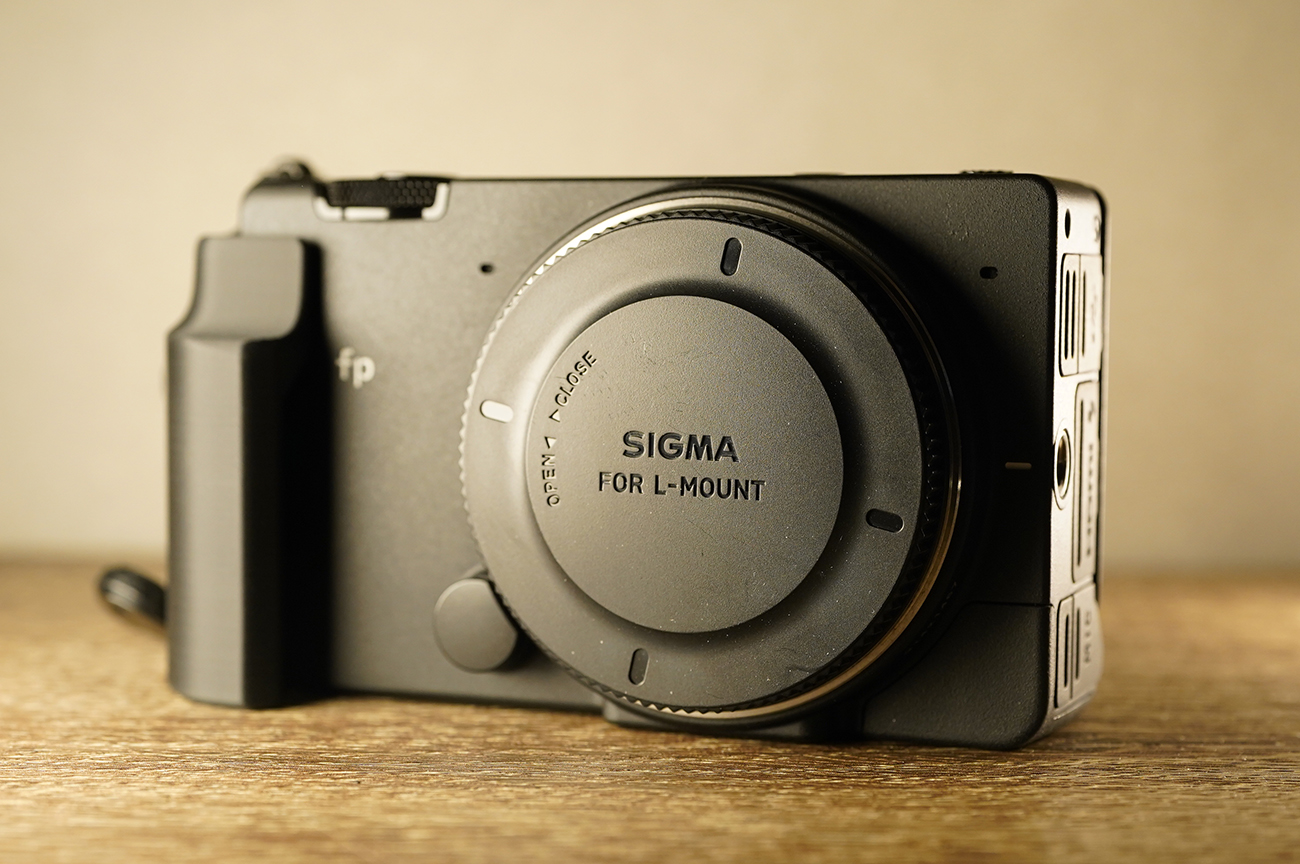
Yes. I admit it. The person who said the SIGMA fp isn’t suitable for client work… was me.
This space (SIMPLICITY -TOKYO-) wasn’t created to talk about client work.
It was meant for my creative activities, simple living, and personal thoughts.
But the SIGMA fp has been so unexpectedly good that I want to share a bit of my work-related experience as well.
All‑Purpose Cameras vs. Deliberately Limited Cameras
For client work, I mainly use the Sony α series—event coverage, interviews, corporate projects, and various commercial shoots.
For video, I use the FX series. In short, Sony is my “all‑purpose camera.”
And the SIGMA fp? That’s the “deliberately limited camera.”
To be honest, I had zero intention of using the fp for client work. It strips away functions on purpose,
embraces minimalism, and demands a very intentional workflow.
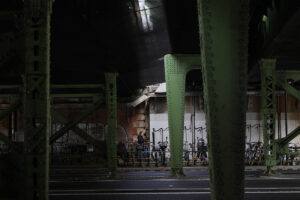
But during a recent street snap session and an event rehearsal test, something clicked:
“Wait… doesn’t this sensor feel similar to the Sony α7 III?”
And then I remembered—SIGMA has publicly stated that the fp’s sensor is manufactured by Sony.
The α7 III was released in March 2018. The SIGMA fp came out in October 2019.
Given the timing, it’s not surprising if they share similar sensor characteristics.
When I first switched to Sony years ago, the cameras I bought were the α7 III and α7R III.
So when I used the fp, the familiarity made sense.
The Weak Points Are the Same
The biggest reason I upgraded from the α7 series to the α9 series was the banding and flicker issues that appear under certain lighting
—especially during silent shooting.
If the client requests “no shutter sound,” then banding becomes a real problem.
In recent years, more and more clients have asked for silent shooting,
so avoiding flicker has become essential.
During a recent event rehearsal, the venue had a large LED screen.
Under those conditions, I tested the fp and thought:
“Ah… it shows up here too.”
At first glance, this sounds negative. But based on my long experience with the α7 III, I realized something important:
The usable range is wider than people assume.
LED Lighting, Mixed Light, and Large Screens
The most difficult environments for the α7 III were:
- Mixed lighting (tungsten + fluorescent/LED in the same room)
- Large LED screens
- Certain indoor lighting frequencies
In these situations, shutter speed adjustments don’t always solve the problem.
The fp behaves similarly. But in single‑source lighting environments (one type of light), the fp performs surprisingly well.
And then there’s the color.
The fp’s color is simply beautiful.
Sony’s JPEG color—especially skin tones—can be harsh.
The fp, on the other hand, has a soft, rich, slightly restrained rendering that feels intentional.
For someone like me, who loves Contax lenses, the fp’s color is extremely appealing.
Home Appliance Makers vs. Lens Makers
During a Sony pro support meeting, someone once told me:
“Well, Sony is a home appliance manufacturer.”
And it suddenly made sense.
Nikon and Canon couldn’t transition smoothly from DSLR to mirrorless because they were bound by the idea of “what a camera should be.”
Sony, being a home appliance manufacturer, wasn’t bound by that.
They built a spec‑heavy, feature‑packed camera without worrying about tradition.
That’s why Sony’s UI and design sometimes feel disconnected from photographers’ needs.
But thanks to years of feedback, the current Sony lineup is extremely easy to use for professional work.
SIGMA, on the other hand, is a lens maker. Their color science and rendering philosophy are completely different.
The SIGMA fp in One Sentence
If I had to describe the fp honestly:
- It can’t do everything.
- It forces you to choose how you shoot.
- It’s a strange, eccentric camera.
- I would never recommend it as someone’s first camera.
- For client work, it’s a niche tool.
- But it has a dark‑horse charm that’s impossible to ignore.
- And above all, it’s incredibly fun to shoot with.
The fp makes me feel the desire to photograph—purely and simply. I’m still exploring the best workflow for it, but I’m enjoying every moment.
It’s late to say this now, but: the SIGMA fp is a fascinating camera.