Writing something like this might make me sound a bit sharp,
but at least in my case, I can say honestly: I don’t rely on gear reviewers.
Or more precisely, I don’t “trust” them in the way people assume.
To begin with, the most honest part is simply: “I don’t watch them.”
Today I want to briefly write about why.
Gear reviewers are reviewers — not cameramen.
And what we need on set is not the newest camera.
When I say I don’t rely on reviewers,
it’s because most of what they talk about isn’t meant for real client work—especially not in demanding, documentary‑style environments.
And that’s perfectly fine. Most people reviewing gear on YouTube are reviewers,
not cameramen sweating on set, dealing with unpredictable conditions, strange lighting, or tight schedules.
(Though of course, some real cameramen also review gear.)
So they talk about things like:
- “Backlight resistance”
- “AF performance”
- “Dynamic range is…”
All of that is useful from a marketing perspective. But from the viewpoint of someone who actually works on set, those things are often the least important.
Why?
Because a cameraman’s job is:
- to understand the quirks of their own gear, and
- to bring back the shot no matter the situation.
If AF seems unreliable, switch to MF. If backlight is tough, adjust your angle or avoid that situation entirely.
If flare is an issue, use it intentionally or change your composition.
You don’t need a magic brush—just the minimum level of gear capability that won’t fail you in real work.
For example, if you own something like a Sony α7III, you’ll rarely struggle in normal shooting.
(If your work is mostly web content, you don’t need 100MP or extreme specs.)
Reviewers talk about gear, but not about photography.
This isn’t their fault—it’s simply the culture.
Everyone loves talking about gear and gadgets. But almost no one wants to hear about photography itself.
Only a handful of “weirdos” enjoy that.
To be honest, I’m not particularly interested in hearing someone else’s photographic philosophy either.
If someone I don’t know starts talking about their “vision,” I just think, “Do whatever you want.”
But talking with fellow cameramen about:
- work
- photography
- gear
- projects
—that I love.
I’m not here to deny reviewers.
Reviewers excel at:
- marketing
- branding
- research
They are extremely important for manufacturers. In fact,
they’re far more effective than traditional advertising.
I have zero intention of criticizing them.
But reviewers are reviewers.
They are not cameramen, and they are not photographers.
Just like creators need literacy when consuming information,
viewers also need a certain level of literacy when watching reviews.
If a cameraman looked at the world through a reviewer’s mindset, they’d think: “Who is this guy?”
And if a reviewer looked at a cameraman’s mindset, they’d think: “This guy is terrible at selling things.”
I’m not trying to pick a fight. But I know some people will read this and think, “Ah, he hates reviewers.” That’s fine.
In the end, photography and filmmaking are simply fun.
To wrap up with something light: Photography and filmmaking are fundamentally fun.
Shooting is fun. Thinking about gear is fun. Imagining what to create next is fun.
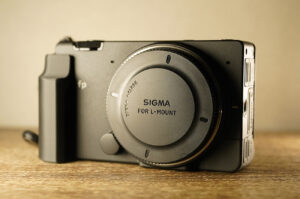
Recently I bought a SIGMA fp for private use,
but I ended up using it heavily for client work instead. Now I’m even considering using it for video.
So I’ve been browsing Amazon every day, buying random rig parts I probably don’t need.
I’m a commercial cameraman whose main work is client photography and videography.
But whether you’re a reviewer or a creator, the most important thing is simply to enjoy your shooting life.
Because photography and filmmaking are, at their core, fun.